
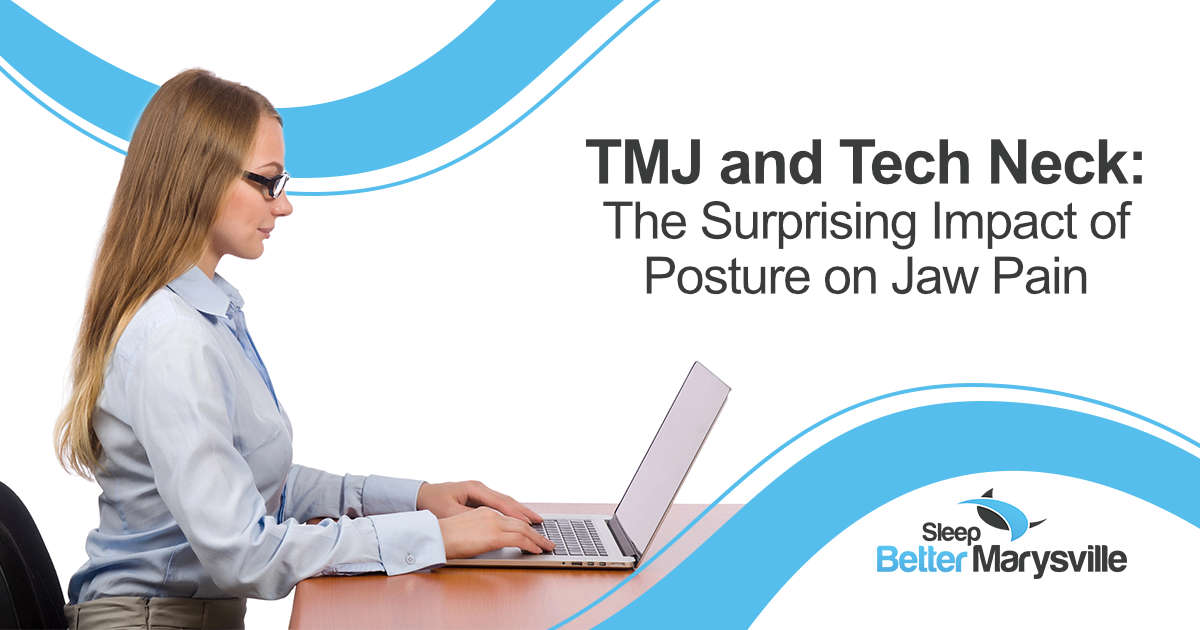
Jaw pain and neck stiffness often develop gradually, making it difficult to recognize that they may share a common cause. Many adults spend hours each day looking down at smartphones, tablets, or computer screens, creating a posture problem commonly known as tech neck. Over time, this forward head posture can place additional stress on the jaw joint, contributing to TMJ and tech neck symptoms that affect daily comfort and quality of life.
Poor posture does not automatically cause temporomandibular joint (TMJ) disorders, but it can become a significant contributing factor. As muscles in the neck, shoulders, and jaw work harder to support the head, tension builds throughout the upper body and may interfere with normal jaw function. Understanding this connection can help individuals recognize symptoms earlier and seek conservative treatment before discomfort becomes chronic.
Understanding TMJ and Tech Neck
Understanding the Temporomandibular Joint (TMJ)
The temporomandibular joints connect the lower jaw to the skull and allow smooth movement when speaking, chewing, yawning, and swallowing. These joints work together with muscles, ligaments, and connective tissues to support comfortable jaw movement throughout the day. When irritation, inflammation, or muscle imbalance affects the joint, individuals may begin experiencing pain, stiffness, or restricted movement.
TMJ disorders can develop from several contributing factors, including teeth grinding, injury, arthritis, stress, or muscle tension. In many cases, posture also plays an important role because the jaw does not function independently from the neck and upper spine. Changes in head position can alter how surrounding muscles support the jaw during everyday activities.
What Is Tech Neck?
Tech neck refers to the forward head posture that develops after spending extended periods looking down at digital devices. Smartphones, laptops, desktop computers, and tablets often encourage people to lean forward, placing extra strain on the muscles supporting the head and neck. As device use has become part of daily life, this posture-related condition has become increasingly common among adults, students, and remote workers.
The average human head weighs approximately 10 to 12 pounds when properly aligned over the spine. As the head moves forward, the muscles supporting it must manage significantly greater mechanical stress. This increased workload creates muscle fatigue that may extend beyond the neck and affect the jaw, shoulders, and upper back.
How TMJ and Tech Neck Are Connected
How Forward Head Posture Changes Jaw Alignment
Forward head posture changes the natural alignment of the cervical spine and surrounding muscles. As the neck shifts forward, muscles responsible for stabilizing the head become overworked while others become weakened, creating a muscular imbalance throughout the upper body. These changes may increase pressure on the temporomandibular joints and alter the way the jaw opens and closes.
Because the jaw and neck function as part of an interconnected musculoskeletal system, poor posture may influence bite mechanics and jaw positioning over time. The muscles that support chewing also assist with head stabilization, meaning excessive strain in one area often affects the other. This relationship explains why TMJ and tech neck frequently occur together rather than as isolated conditions.
Why Poor Posture Increases Muscle Tension
Poor posture increases tension throughout the neck, shoulders, face, and jaw muscles. Tight muscles can limit normal movement while placing additional stress on the temporomandibular joints during chewing, speaking, or even resting. As tension continues to build, individuals may begin experiencing tech neck jaw pain alongside headaches and facial discomfort.
Connective tissues surrounding the jaw also respond to repetitive strain created by prolonged forward head posture. Over time, these tissues may become irritated, making jaw movement less comfortable and increasing muscle fatigue. Although posture is rarely the only cause of TMJ disorders, it can significantly contribute to ongoing symptoms when combined with other risk factors.
Common Symptoms of Tech Neck Jaw Pain
The symptoms associated with posture-related TMJ problems often develop gradually rather than appearing suddenly. Many people initially notice neck stiffness after working at a computer before recognizing increasing discomfort around the jaw. Because these symptoms overlap, the connection between posture and jaw pain may go unnoticed for months.
Common symptoms may include:
- Jaw pain or tenderness
- Jaw clicking or popping
- Neck stiffness
- Frequent headaches
- Facial pain or muscle tightness
- Shoulder tension
- Ear discomfort or pressure
- Limited jaw movement
- Difficulty chewing
- Morning jaw soreness
- Muscle fatigue after prolonged screen use
Many individuals report that symptoms worsen after spending several hours using digital devices without changing position. Sitting with poor posture throughout the workday may place continuous strain on muscles responsible for supporting both the neck and jaw. Taking regular movement breaks and maintaining proper posture may help reduce symptom severity for some individuals.
Everyday Habits That Can Make TMJ and Tech Neck Worse
Device and Workstation Habits
Daily habits often contribute to posture-related jaw discomfort without individuals realizing it. Looking down at a phone for extended periods, working from a laptop positioned too low, or using multiple screens with poor alignment may all encourage forward head posture. Over time, these repetitive positions can increase stress throughout the jaw and cervical spine.
Poor workstation ergonomics can also worsen muscle fatigue. A monitor positioned below eye level, unsupported seating, or prolonged sitting without breaks places additional demands on the muscles responsible for maintaining posture. Small ergonomic adjustments may reduce unnecessary strain and improve overall comfort during the workday.
Additional Lifestyle Factors
Several lifestyle habits may increase the likelihood of posture-related TMJ discomfort. Teeth clenching during stressful situations, nighttime grinding, poor sleeping posture, repetitive muscle strain, and limited physical activity can all contribute to muscle tension around the jaw. When combined with forward head posture, these habits may intensify existing symptoms.
Stress deserves particular attention because it often increases unconscious jaw clenching throughout the day. Persistent muscle contraction may place additional pressure on the temporomandibular joints while reducing opportunities for muscles to relax. Managing stress alongside posture improvements often produces better long-term results than addressing either factor alone.
Why Early TMJ Posture Treatment Matters
Ignoring posture-related jaw pain may allow symptoms to become more persistent over time. As muscles continue compensating for poor alignment, chronic tension can develop throughout the neck, shoulders, and jaw, making daily activities increasingly uncomfortable. Long-standing muscle compensation patterns may also become more difficult to correct without professional guidance.
Potential complications may include chronic jaw pain, worsening headaches, recurring neck stiffness, reduced jaw mobility, sleep disruption, and decreased quality of life. While posture alone rarely causes TMJ disorders, addressing contributing factors early may help prevent symptoms from becoming more severe. Early evaluation also allows healthcare providers to identify other conditions that may be contributing to jaw discomfort.
Conservative TMJ Posture Treatment Options
Posture Correction and Ergonomic Improvements
Improving posture is often one of the first recommendations for individuals experiencing posture-related jaw discomfort. Maintaining a neutral spine, positioning monitors at eye level, relaxing the shoulders, and taking regular standing breaks can reduce unnecessary muscle strain throughout the upper body. Consistent ergonomic improvements may help decrease stress placed on both the neck and jaw.
Small changes throughout the workday often produce meaningful benefits over time. Adjusting chair height, using supportive seating, and avoiding prolonged periods of looking downward encourage healthier body mechanics. These habits support better posture while reducing repetitive stress associated with prolonged device use.
Jaw Exercises and Physical Therapy
Targeted exercises may improve mobility, flexibility, and muscle coordination around the jaw and neck. Physical therapists often recommend stretching, strengthening exercises, posture retraining, and manual therapy techniques designed to restore balanced movement patterns. These conservative treatments can complement other approaches aimed at reducing muscle tension.
Exercise programs should always be individualized based on the patient’s symptoms and overall condition. Performing exercises incorrectly or too aggressively may worsen discomfort rather than improve it. Professional guidance helps ensure exercises remain safe and effective throughout recovery.
Stress Reduction and Muscle Relaxation
Stress management plays an important role in reducing unnecessary jaw muscle tension. Relaxation techniques such as deep breathing, mindfulness, and progressive muscle relaxation may decrease daytime clenching and encourage healthier muscle function. Better stress control can also improve overall physical well-being while supporting other treatment strategies.
Developing healthy daily habits contributes to long-term symptom management. Regular physical activity, adequate sleep, hydration, and scheduled movement breaks all help reduce muscle fatigue throughout the body. When combined with posture correction, these habits may improve comfort during everyday activities.
Custom Oral Appliance Therapy
For some individuals, custom oral appliance therapy may become an important part of TMJ posture treatment. Professionally fitted oral appliances help stabilize the jaw, reduce nighttime clenching or grinding, and decrease stress placed on the temporomandibular joints during sleep. By promoting a more balanced jaw position, these appliances may help reduce muscle tension while protecting the joints from excessive strain.
Oral appliance therapy is typically recommended as part of a comprehensive treatment plan rather than as a standalone solution. Healthcare providers consider posture, muscle function, lifestyle habits, and overall jaw health before recommending personalized treatment. Combining conservative therapies often provides the greatest opportunity for lasting symptom improvement.
When to Schedule a TMJ Evaluation
Occasional jaw discomfort after a long workday may improve with rest and posture correction, but persistent symptoms should not be ignored. Professional evaluation is recommended when jaw pain continues for several weeks, headaches become more frequent, jaw locking occurs, or opening the mouth becomes increasingly difficult. Recurring neck stiffness despite ergonomic improvements may also indicate that additional assessment is appropriate.
A comprehensive TMJ evaluation helps identify the factors contributing to jaw discomfort and guides individualized treatment recommendations. Depending on the findings, conservative care may include posture education, oral appliance therapy, lifestyle modifications, or coordination with other healthcare professionals. Early diagnosis often improves the opportunity to manage symptoms before they become chronic.
Find Relief from TMJ and Tech Neck at Sleep Better Marysville
Living with ongoing jaw pain, neck stiffness, or recurring headaches can make everyday activities less comfortable, but effective conservative care is available. Sleep Better Marysville provides comprehensive TMJ evaluations to determine how posture, muscle function, and jaw alignment may be contributing to each patient’s symptoms. Learn more about TMJ treatment and schedule a professional evaluation to receive a personalized treatment plan that supports lasting comfort and healthier jaw function. Because posture-related TMJ symptoms often worsen gradually, seeking evaluation early may help prevent long-term discomfort.
 //Simplify chat widget